






Different types of service lifts and their uses

Contents |
Introduction
There are many different types of service lifts, all designed to offer simple, quick and efficient solutions where lifting problems may occur. Service lifts and dumbwaiter lifts are designed for a variety of professional environments, but they are not intended for human use.
This results in service lifts being exempt from many regulations which apply to other lift types. They are also highly flexible, as they tend to occupy less space than other lifts.
Service lifts can offer improvements in productivity, adapting to businesses needs whilst following building regulations.
Dumb waiter lifts
Dumb waiter lifts, also known as micro-lifts, food lifts or kitchen lifts, are used for transporting food or drink between floors. They are most commonly found within restaurants, bars, pubs, or within the homes of individuals with limited mobility. They are sometimes also installed in retail, office and medical environments.
They were first invented in the 19th century, with the original meaning of the phrase indicating a device more akin to a serving tray. Dumb waiter lifts can be adjusted to suit premises which are restricted in terms of headroom and have problematic maintenance access and limited space.
Dumbwaiter lifts can carry an average of 50-100 kg, and can move at 0.35 m/sec to serve up to six separate floors.
Dumb waiter lifts can improve business efficiency by transporting meals, materials, or other objects in less time than would be possible by foot. Additionally, they can reduce the strain on a person’s body or the risk of injury from carrying objects.
Trolley lifts
Trolley lifts are useful in circumstances where larger and heavier loads need to be transported, and can handle loads up to 300 kg. Used in settings such as retail, hotel or commercial premises to transport trolleys and crates, they can serve the same number of floors as dumb waiters, generally up to six floors, but they are slightly slower, with an average speed of 0.17 m/sec.
Operating inside a structure-supported frame, a trolley lift is easy to install and causes little disruption to business, and, with no motor room or ‘load-bearing’ shaft required, they are also cheaper.
Continuing technological innovations result in a typically lower cost, and their quick installation causes minimal disruption.
Find out more
Related articles on Designing Buildings Wiki
- Considerations When Installing a Residential Lift.
- Escalator.
- Lifting device.
- Lifts and Their Special Operating Modes.
- Lifts for buildings.
- Lifts for office buildings.
- The importance of service lifts.
- The science of lifts.
--Nathan Massey 14:22, 16 Oct 2017 (BST)
Featured articles
Check out some of the best features and news from Designing Buildings as well as key stories from around the web.
Mayors are to be given planning call in powers

Mayors across England will be able to make the most important planning decisions.

The Master Builder: William Butterfield and his times. Book review.

Why construction can't afford to ignore the skills gap.
Building Safety Regulator, 19 August

Gill Kernick appointed Independent Chair of Residents’ Panel.
Connecting knowledge, technology and conservation
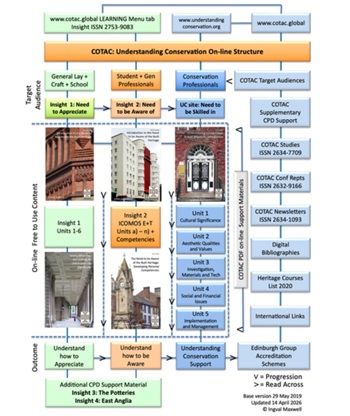
Building competence for the future of built heritage.
Building Regulations and Building Safety Act
CIOB publishes free advice for non-domestic clients.

Building Safety Newsletter from MHCLG.

An extraordinary record of steel engineering worldwide.

Households living near new pylons to save on bills.

ECA warns growth must not outpace grid capacity or skills.
The role of the client and decision making

CIOB response to built environment professions call for evidence.
Construction's sustainability reporting revolution

Tracking upfront embodied carbon with digital tools.